
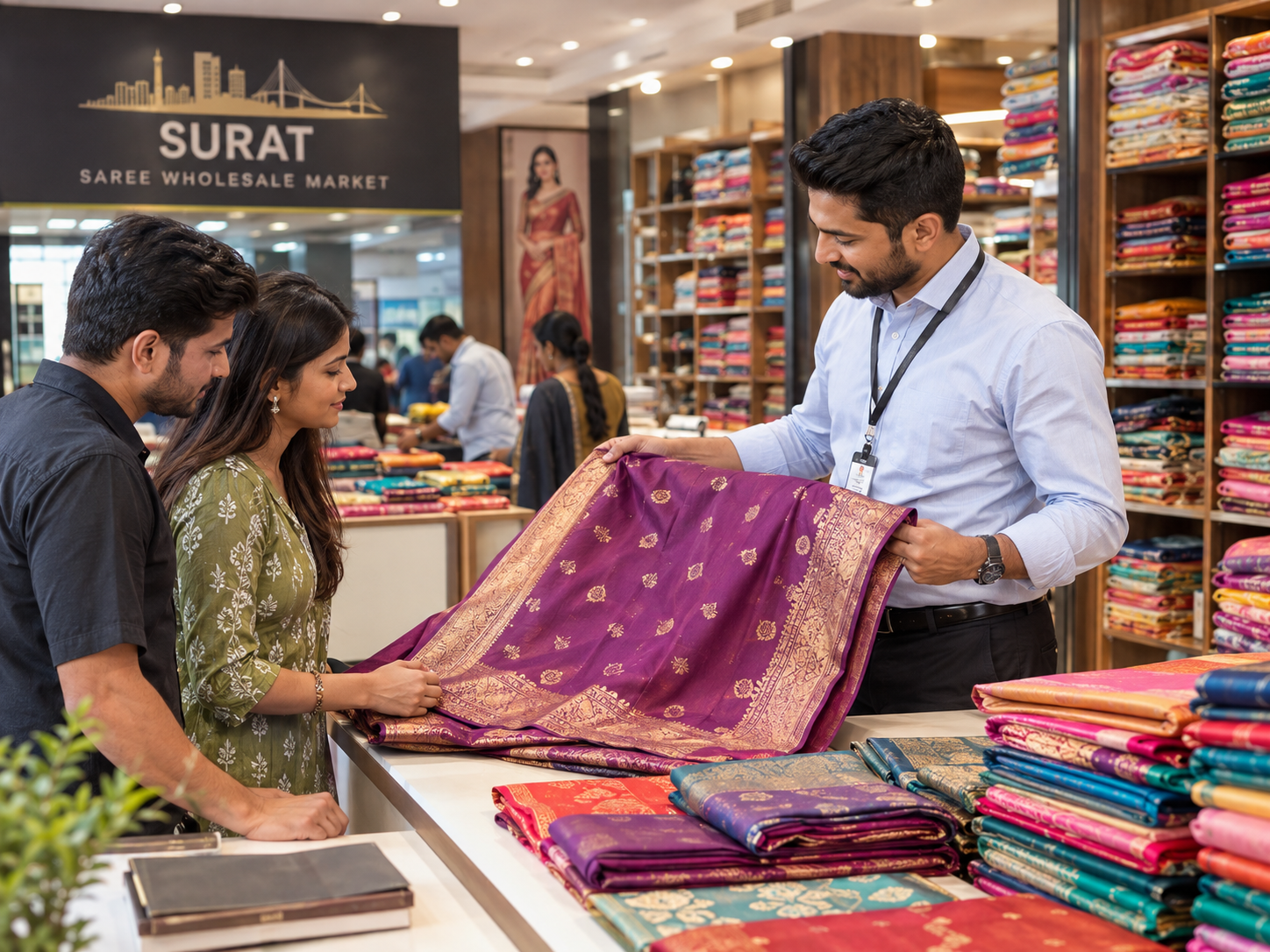
How to Choose the Right Saree Wholesaler in Surat for Your Business
Surat is one of India's well-known textile hubs, attracting retailers, resellers, boutique owners, and textile entrepreneurs looking for sarees in bulk. Choosing the right saree wholesaler in Surat can make a significant difference to your product quality, profit margins, customer satisfaction, and long-term business growth.
Whether you are starting a new saree business or expanding an existing clothing store, selecting a reliable wholesale supplier requires careful research. From checking fabric quality to comparing prices and understanding order terms, every step plays an important role in making smart purchasing decisions.
1. Check the Quality of Sarees
Product quality should be one of your top priorities when selecting a saree wholesaler. Examine the fabric, weaving, prints, embroidery, borders, finishing, and overall appearance of the sarees before placing a bulk order.
Whenever possible, inspect product samples or request detailed photographs and videos. If you are buying through an online or remote supplier, confirm the product specifications and ask for clear information about the fabric and design.
2. Compare Wholesale Prices
Pricing directly affects your business margins. Compare prices from different saree wholesalers in Surat, but avoid making your decision based only on the lowest quotation. Consider the quality, design, finishing, packing, shipping charges, and applicable taxes when calculating the total purchase cost.
A reliable supplier should communicate pricing and order conditions clearly. Understanding the complete cost before purchasing helps retailers plan their budgets and set appropriate selling prices.
3. Look for a Wide Variety of Saree Designs
Customers have different preferences based on occasions, seasons, budgets, and fashion trends. A varied saree collection can help retailers serve a broader customer base and keep their inventory interesting.
Explore different fabric types, colours, prints, patterns, and traditional or contemporary designs. Before purchasing in bulk, consider the preferences of your target customers and the styles that are most suitable for your market.
4. Verify the Supplier's Reliability
Building a relationship with a dependable saree wholesaler can support your business over the long term. Research the supplier's business presence, customer feedback, communication practices, and product information before placing an order.
Ask clear questions about stock availability, dispatch timelines, payment terms, replacement policies, and how damaged or incorrect products are handled. Written order confirmations can help reduce misunderstandings between buyers and suppliers.
5. Understand Minimum Order Quantity and Shipping Terms
Wholesale suppliers may have different minimum order quantities (MOQs), payment requirements, and delivery arrangements. Make sure these terms suit your business size and cash flow before confirming a purchase.
First-time buyers should understand whether mixed designs or colours are allowed, how packing is handled, what shipping costs apply, and when the order is expected to arrive. Clear communication makes bulk buying easier to manage.
6. Plan Your Inventory According to Customer Demand
Buying large quantities without understanding customer demand can tie up working capital and leave you with slow-moving stock. Study your sales history, customer preferences, seasonal requirements, and local competition before selecting a collection.
Balance popular designs with new styles, and plan quantities according to your budget. For a new business, a carefully planned initial order can be a practical way to understand customer response before increasing purchase volumes.
7. Build a Long-Term Supplier Relationship
A strong business relationship is based on clear communication, consistent expectations, and professional service. Share your requirements with your supplier, ask about new collections, and maintain records of orders and product performance.
Over time, a dependable supplier relationship can make repeat purchasing and collection planning more convenient. Always confirm current prices, availability, and terms for each order.
Why Choose Jay Ambe Group Lalaji?
Jay Ambe Group Lalaji is associated with Surat's textile market and offers saree collections for buyers exploring wholesale textile opportunities. Retailers and resellers can enquire about available designs, product details, pricing, and bulk purchasing terms to determine whether the collection suits their business requirements.
When evaluating any wholesale supplier, focus on product quality, transparent communication, and clear order conditions. These factors help you make informed purchasing decisions and build a stronger foundation for your textile business.
Conclusion
Choosing the right saree wholesaler in Surat involves more than comparing prices. Product quality, design variety, supplier reliability, minimum order quantities, shipping terms, and customer demand all deserve careful consideration.
By researching suppliers and planning your purchases strategically, you can reduce avoidable buying risks and build a saree collection that matches your customers' needs. Explore wholesale opportunities with Jay Ambe Group Lalaji and make informed decisions for your textile business.
Frequently Asked Questions (FAQs)
How do I choose a saree wholesaler in Surat?
Compare product quality, pricing, design variety, supplier reliability, minimum order quantities, shipping terms, and customer feedback before placing an order.
What should I check before buying sarees in bulk?
Check fabric details, colours, prints, finishing, product specifications, total cost, stock availability, and the supplier's return or replacement terms.
Is Surat suitable for wholesale saree buying?
Surat is a major textile hub in India with a broad range of textile businesses and saree collections. Buyers should research individual suppliers to find products that fit their requirements.
How can retailers reduce wholesale buying risks?
Verify suppliers, confirm order details in writing, inspect samples when possible, understand shipping terms, and purchase quantities based on customer demand.