How to Find the Right Saree Collection for Your Local Market
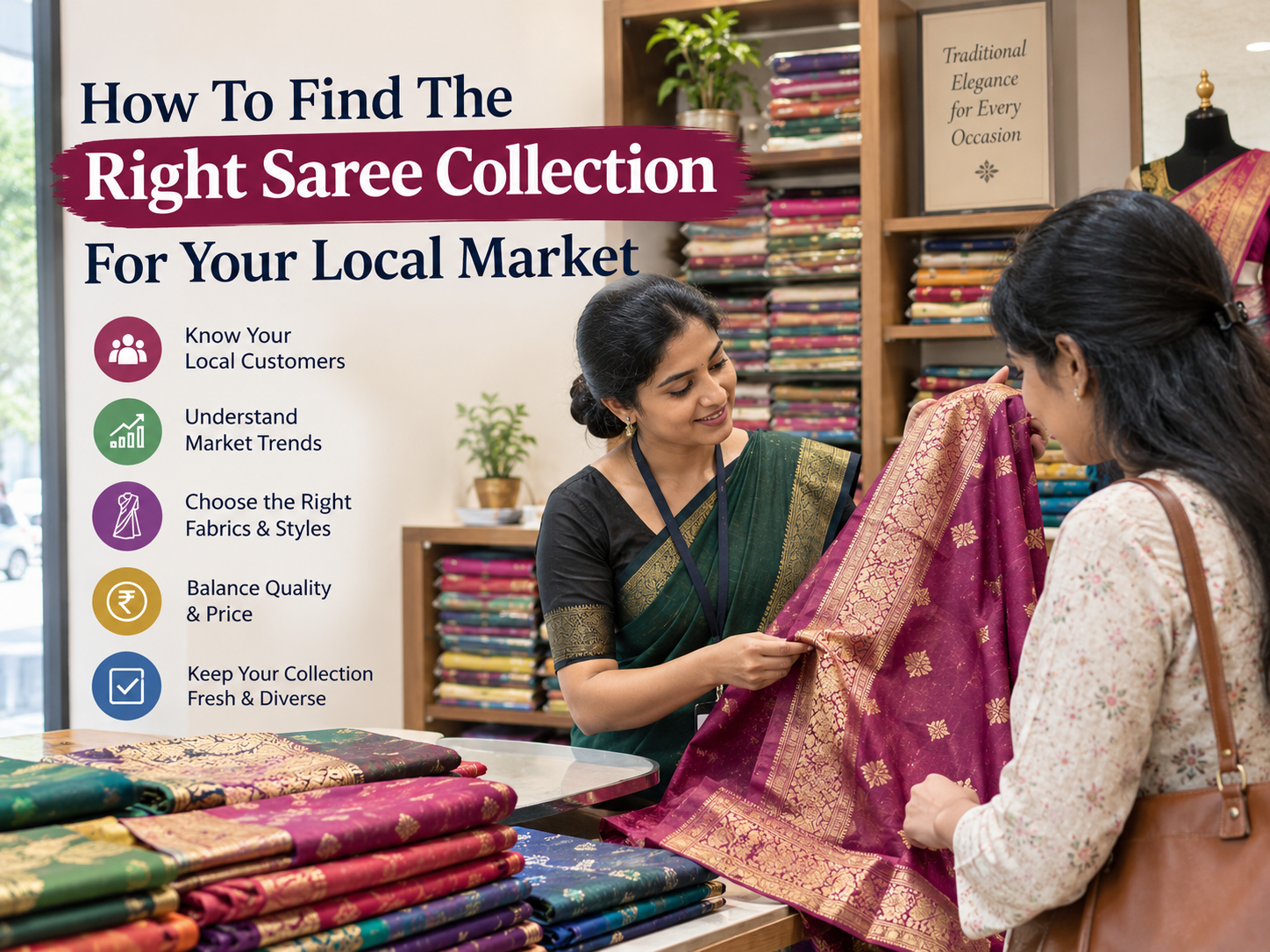
Choosing the right saree collection is one of the most important decisions for a retail saree business. Customers in different cities, regions and markets can have different preferences when it comes to fabrics, colours, designs, price ranges and occasions.
For retailers, simply buying popular-looking sarees in bulk may not always be enough. A successful collection should be selected according to the requirements of the local market. Understanding your customers and choosing the right wholesale sarees can help create a more relevant and attractive product range.
1. Understand Your Local Customers
The first step in building the right saree collection is understanding your target customers. Before purchasing new stock, retailers should identify who their main customers are and what they usually look for.
Consider factors such as customer age, lifestyle, purchasing power, preferred styles and the occasions for which they normally purchase sarees.
- Customer age group
- Preferred price range
- Popular colours
- Preferred fabrics
- Daily wear requirements
- Wedding and festive requirements
- Local fashion preferences
2. Study What Customers Are Already Buying
Your existing sales can provide valuable information about your local market. Retailers should regularly review which sarees sell faster and which products remain in inventory for longer periods.
Look at your previous sales and identify patterns in fabrics, colours, designs and price ranges. This information can help you make better decisions when purchasing your next wholesale saree collection.
3. Select Fabrics According to Local Demand
Different markets may have different preferences for saree fabrics. Some customers may prefer lightweight sarees for everyday use, while others may look for premium fabrics for weddings and special occasions.
Retailers can consider different fabric categories such as:
- Silk Sarees
- Georgette Sarees
- Organza Sarees
- Cotton Sarees
- Chiffon Sarees
- Satin Sarees
- Crepe Sarees
- Designer Sarees
The right combination should depend on your customers, climate, occasions and purchasing preferences.
4. Keep Different Price Segments
Price is an important factor in saree retailing. Customers often visit a store with a specific budget in mind, so offering products across different price points can make your collection more suitable for a wider audience.
A balanced collection can include:
- Budget Sarees – Suitable for value-conscious customers
- Regular Sarees – Everyday and casual requirements
- Festive Sarees – Suitable for celebrations
- Party Wear Sarees – For functions and events
- Premium Sarees – Higher-value collections
- Designer Sarees – Special occasion and fashion-focused customers
5. Consider Local Festivals and Occasions
Local festivals, wedding seasons and social events can influence saree demand. Retailers should plan their inventory according to the occasions that are important in their market.
Traditional and festive sarees may receive more attention during celebration periods, while lightweight and comfortable styles can be suitable for regular shopping requirements.
Planning collections around local occasions can help retailers keep their inventory relevant throughout the year.
6. Choose Colours That Match Your Market
Colour preferences can vary between customer groups and markets. Some customers may prefer bright and vibrant colours, while others may look for pastel, neutral or contemporary shades.
Instead of purchasing too many sarees in one colour family, retailers can maintain a balanced selection of traditional, pastel, bright and modern shades.
7. Offer Both Traditional and Contemporary Designs
A good saree collection can combine traditional styles with contemporary designs. Traditional sarees can appeal to customers looking for cultural and occasion wear, while modern prints and updated designs can attract customers who prefer contemporary fashion.
A combination of both categories can provide more variety and help retailers serve customers with different fashion preferences.
8. Avoid Buying Too Much of One Design
When a particular saree looks attractive, retailers may be tempted to purchase a large quantity. However, buying too much of a single design can create inventory challenges if customer demand changes.
Retailers can maintain variety by purchasing suitable quantities across different fabrics, colours, designs and price segments.
9. Choose the Right Wholesale Saree Supplier
Once you understand your local market, the next step is finding a supplier who can provide products that match your requirements.
When searching for a wholesale saree supplier in Surat, retailers can consider:
- Product quality
- Collection variety
- Wholesale pricing
- Availability of new designs
- Different fabric options
- Order requirements
- Supply consistency
- Business experience
Working with a supplier offering a diverse collection can make it easier to update your inventory according to your local market requirements.
10. Keep Your Collection Updated
Customer preferences can change over time. Retailers should regularly review their inventory and introduce new designs while continuing to stock products that have consistent demand.
A combination of best-selling products and fresh collections can help maintain variety without completely changing the store's product range.
How to Build a Local-Market-Focused Saree Collection
Retailers can follow a simple process when planning their next wholesale purchase:
- Identify your target customers.
- Review your previous sales.
- Identify popular fabrics and designs.
- Understand local festivals and occasions.
- Set different price segments.
- Select a mix of traditional and modern designs.
- Choose suitable quantities for each category.
- Work with a reliable wholesale supplier.
- Monitor customer response.
- Update your collection regularly.
Why Surat Is Important for Wholesale Saree Buyers
Surat is one of India's major textile markets and offers retailers access to a wide range of sarees, fabrics and ethnic wear collections.
Businesses looking for wholesale sarees in Surat can explore different product categories and price segments according to their local customer requirements.
For retailers, sourcing from an experienced textile supplier can make it easier to maintain product variety and regularly introduce new collections.
Build a Collection That Matches Your Customers
The ideal saree collection is not necessarily the one with the largest number of products. It is the collection that matches the requirements of your customers.
A retailer can create a balanced product range by combining:
Daily Wear + Festive Wear + Party Wear + Traditional + Designer + Premium + Lightweight Collections
The exact combination can be adjusted according to local demand, customer preferences, budget and seasonal requirements.
Conclusion
Finding the right saree collection for your local market requires proper planning and an understanding of customer demand. Retailers should consider fabrics, designs, colours, occasions, pricing and inventory levels before purchasing wholesale sarees.
By studying your local customers and working with a reliable wholesale supplier, you can create a collection that offers variety while remaining relevant to your target market.
Jay Ambe Group Lalaji provides a wide range of sarees and ethnic wear collections for retailers, wholesalers and fashion businesses looking for textile products from Surat.
A customer-focused collection combined with quality products, suitable pricing and regular updates can help retailers build a strong and organized saree business.