
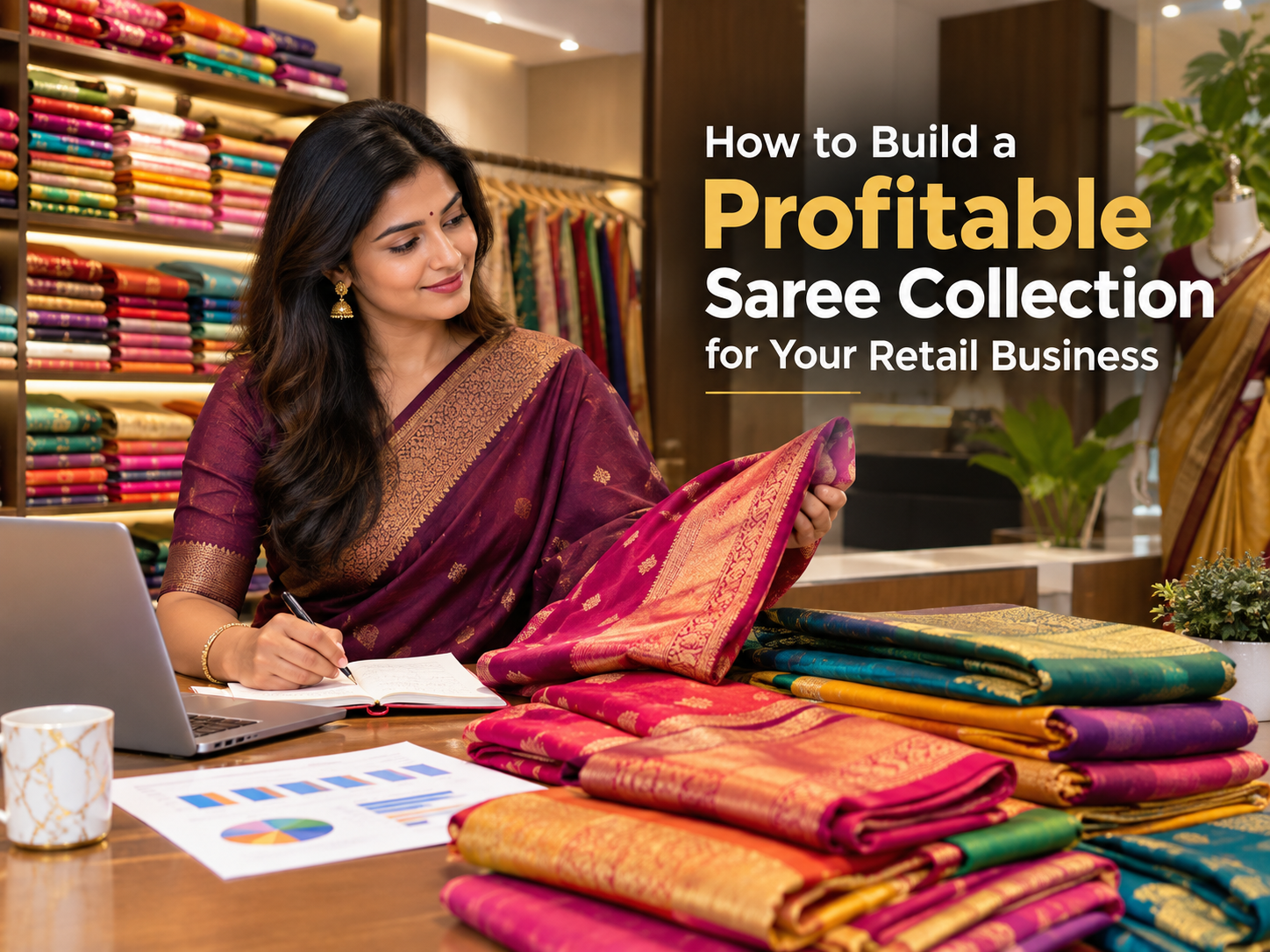
How to Build a Profitable Saree Collection for Your Retail Business
Building a successful saree retail business starts with choosing the right collection. Customers today look for a combination of attractive designs, quality fabrics, comfortable styles and suitable price ranges. For retailers, the right product mix can help create a collection that serves different customer requirements and occasions.
When purchasing wholesale sarees for a retail business, retailers should look beyond individual designs and focus on creating a balanced product range. From daily wear sarees to festive and designer collections, each category can serve a different customer requirement.
1. Understand Your Target Customers
Before building your saree collection, understand the customers who visit your store. Their age group, budget, lifestyle and preferred occasions can influence which products you should stock.
For example, a store located in a market with regular family shoppers may require a strong daily wear collection, while a boutique serving wedding customers may need more premium and designer sarees.
- Identify your main customer age groups
- Understand their preferred price range
- Study popular colours and designs
- Identify common buying occasions
- Review your previous best-selling products
2. Create a Mix of Saree Categories
A profitable retail collection should offer variety rather than focusing on only one type of saree. Different categories can attract different customers and occasions.
A balanced collection can include:
- Daily Wear Sarees
- Festive Wear Sarees
- Party Wear Sarees
- Designer Sarees
- Traditional Sarees
- Lightweight Sarees
- Premium Sarees
- Occasion Wear Collections
This type of product mix allows retailers to offer customers more choices while maintaining a diverse store collection.
3. Select the Right Saree Fabrics
Fabric selection is another important factor when building a saree collection. Different fabrics offer different looks, comfort levels and styling options.
Retailers can explore fabrics such as silk, georgette, organza, chiffon, satin, cotton, crepe and other fashion fabrics according to their target market.
Maintaining a combination of lightweight, traditional and premium fabrics can help retailers cater to customers with different preferences.
4. Maintain Multiple Price Ranges
A retail store can attract a wider range of customers by offering sarees across different price segments. Customers often enter a store with a specific budget, so providing multiple options can make the shopping experience more convenient.
A collection can be divided into:
- Budget Range: Everyday and value-focused options
- Mid Range: Regular and occasion wear collections
- Premium Range: Higher-quality fabrics and detailed designs
- Designer Range: Special occasion and statement collections
A balanced price structure can help retailers serve different customer segments without depending on a single price category.
5. Focus on Design Variety
Design variety is essential in the saree business. Customers may have different preferences regarding prints, embroidery, borders, colours and patterns.
Instead of purchasing too many similar designs, retailers can create variety through different combinations of colours, fabrics, prints and embellishments.
A diverse collection can include floral prints, traditional motifs, contemporary patterns, embroidery, zari details, printed designs and elegant border work.
6. Plan Your Collection According to Occasions
Sarees are purchased for different occasions, and retailers can plan their inventory accordingly. Daily wear, festivals, weddings, parties and family functions can all require different styles.
For festive and wedding seasons, retailers can consider adding more traditional and premium collections. For regular customers, lightweight and comfortable sarees can remain an important part of the inventory.
7. Keep Your Collection Updated
Customer preferences and fashion styles continue to change. Retailers should regularly review their inventory and introduce new designs while maintaining proven categories.
Updating the collection does not mean replacing every product. Instead, retailers can gradually introduce new colours, patterns, fabrics and designs based on customer response and market demand.
8. Choose a Reliable Wholesale Saree Supplier
The supplier you work with can have an important role in maintaining your retail collection. A reliable wholesale saree supplier in Surat can provide access to different categories, designs and price ranges.
When selecting a supplier, retailers can consider:
- Product quality
- Design variety
- Wholesale pricing
- New collection availability
- Product consistency
- Order requirements
- Business experience
- Customer support
Building a long-term relationship with a suitable supplier can make regular sourcing and collection planning more convenient.
9. Study Your Best-Selling Products
Sales data can provide useful information when planning future purchases. Retailers should identify which fabrics, colours, price ranges and designs receive the strongest customer response.
Instead of relying only on assumptions, reviewing actual sales performance can help retailers make more informed inventory decisions.
10. Balance Fast-Moving Products With New Designs
Retailers need both familiar products and fresh designs. Best-selling categories can provide consistency, while new designs can bring variety to the store.
A practical approach is to maintain popular collections while regularly testing new designs in suitable quantities. Customer response can then guide future purchasing decisions.
Why Surat Is a Major Destination for Wholesale Sarees
Surat is widely known for its textile industry and offers a broad range of sarees and ethnic wear products. Retailers and wholesalers can explore different fabrics, designs and price segments through the city's textile business network.
For businesses searching for wholesale sarees in Surat, sourcing from an experienced textile supplier can provide access to a wider range of products for building a retail collection.
How to Create a Balanced Saree Collection
A retailer can use a simple collection structure to maintain variety:
Daily Wear + Lightweight + Festive Wear + Party Wear + Traditional + Designer + Premium
The exact product mix can be adjusted according to the store's customers, location, budget and sales history.
Benefits of a Well-Planned Saree Collection
A properly planned collection can make it easier for customers to find products according to their needs. It can also help retailers organize inventory across different categories and price ranges.
- More variety for customers
- Better coverage of different price segments
- Improved inventory planning
- More options for different occasions
- Regular opportunities to introduce new designs
Conclusion
Building a profitable saree collection requires careful planning rather than simply purchasing a large quantity of products. Understanding customer demand, selecting suitable fabrics, maintaining different price ranges and offering design variety can help retailers create a more effective product mix.
Retailers should also regularly review their sales performance and update their collection according to customer requirements and market demand. Working with a reliable wholesale saree supplier in Surat can make the process of sourcing diverse saree collections easier.
Jay Ambe Group Lalaji offers a diverse range of sarees and ethnic wear collections for retailers, wholesalers and businesses looking for textile products from Surat.
A well-planned collection, consistent product quality and a customer-focused approach can help retailers build a strong foundation for their saree business.